

Amazon Prime vs. Walmart+ vs. Target Circle: Which Membership Offers the Best Value?
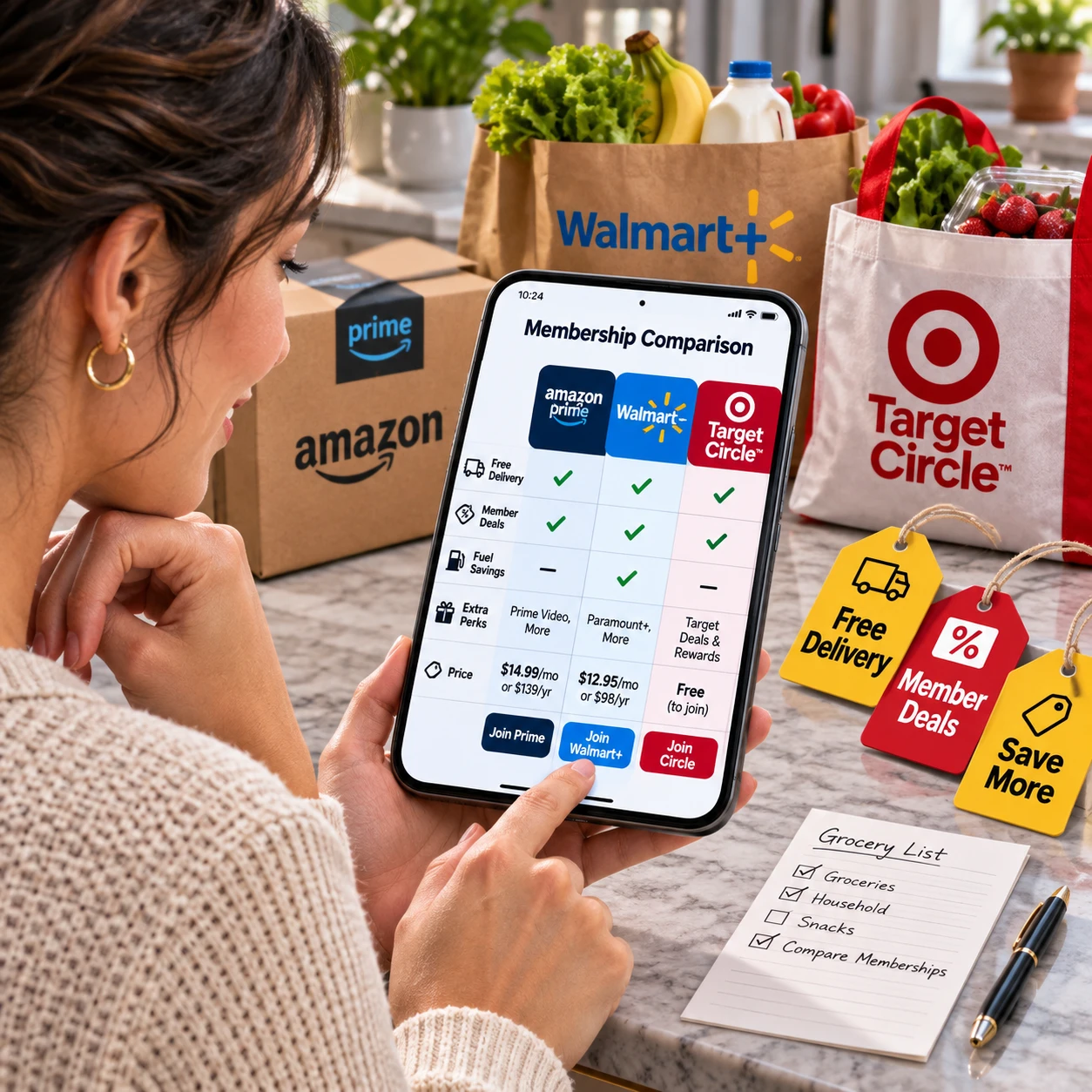
Amazon Prime, Walmart+, and Target Circle can all help shoppers get more value, but they work in different ways. Prime and Walmart+ are paid memberships with delivery and other perks, while Target Circle offers a free rewards program alongside optional paid benefits. The right choice depends on where you shop, how often you order, and which perks you will actually use.
Before signing up, compare the annual or monthly fee with realistic savings: shipping charges avoided, grocery delivery used, fuel discounts claimed, and offers redeemed. Program prices, benefits, and local availability can change, so check each retailer’s current terms before making a decision.
At a glance: how the three programs differ
Amazon Prime centers on online shopping and a broad set of digital and delivery benefits, Walmart+ focuses on Walmart shopping and convenience, and Target Circle combines free offers with optional paid membership benefits. Their value depends on where your regular purchases already happen.
- Amazon Prime: A paid membership known for eligible fast shipping, with additional benefits that may include entertainment and shopping perks. It suits frequent Amazon customers who can use several parts of the bundle.
- Walmart+: A paid membership built around Walmart orders, including eligible delivery and shipping benefits, with fuel savings at participating locations. It may appeal to households that buy groceries and essentials from Walmart regularly.
- Target Circle: Target’s free rewards program provides access to deals and offers. Target also offers paid membership options, including Circle 360, whose delivery and other benefits differ from the free program.
A useful way to compare them is the habit-perk-cost test: identify your most frequent retailer, list the benefits you would use in a typical month, then compare their practical value with the membership fee. A benefit you rarely use should count for little, even if it looks impressive in a feature list.
Membership costs and free options
Target Circle has a free program, while Amazon Prime and Walmart+ generally require payment for their core memberships; Target also offers paid benefits through separate membership options. Compare current prices and terms directly, because fees, trials, eligibility, and plan details can change.
Prime and Walmart+ may offer monthly and annual payment options, and eligible customers may qualify for special pricing or trials. Check whether a trial automatically renews, when cancellation takes effect, and which benefits require an extra fee. The annual plan can cost less per month, but only if you expect to keep using it.
Target Circle is the lowest-risk starting point for Target shoppers because its free offers do not require a paid membership. A paid Target option may add convenience, such as delivery benefits, but the free program and a paid plan are not interchangeable. Read the benefit list for the exact plan available to you.
Estimate your break-even point before subscribing. If a membership costs $X per year, divide that amount by the average value of a perk you will use. For example, if you expect to save $5 on a delivery fee each time, you would need 20 qualifying uses to offset a $100 annual fee, before counting other benefits or restrictions. This is a planning example, not a promise of savings.
Shipping, delivery, and pickup perks
Amazon Prime is most useful for eligible Amazon shipping, Walmart+ for eligible Walmart delivery and shipping, and Target Circle’s delivery benefits depend on whether you use its free program or a paid option. Delivery windows, order minimums, fees, and service areas vary by location and order.
For online orders, Prime may reduce or remove shipping charges on eligible items, while Walmart+ includes shipping and delivery benefits on qualifying Walmart purchases under its current terms. Neither membership makes every item or delivery method free. Check product eligibility, minimum order rules, surcharges, and the final checkout total.
Grocery delivery can make a larger difference than parcel shipping for shoppers who place frequent, planned orders. Walmart+ may offer delivery from local stores where the service is available; Amazon grocery options depend on the service, location, and eligibility. Target’s same-day services may include delivery through Shipt, with access and fees determined by the service and membership terms. Pickup is a separate convenience: store pickup may be free or available without a paid membership, so compare it before paying for delivery.
Availability matters as much as the headline perk. A membership cannot save time if your address is outside the service area, the preferred time slots are unavailable, or the items you need do not qualify. Check your ZIP code and test a representative basket before joining.
Deals, rewards, and everyday savings
Amazon Prime, Walmart+, and Target Circle offer different routes to savings: member-only pricing or deals, delivery-related value, fuel discounts, and Target offers or rewards. The savings count only when they apply to purchases you were already likely to make.
Amazon Prime members may see exclusive deals and shopping events, while Walmart+ can include member benefits such as fuel discounts at participating stations. Fuel savings are valuable for drivers who use eligible locations, but less useful if those stations are inconvenient or the discount does not apply to their usual fuel purchases.
Target Circle emphasizes offers and rewards tied to Target shopping. Members can browse available deals in the Target app or account, then apply eligible offers at checkout. Some promotions may combine with other discounts or coupons, but exclusions and stacking rules vary by offer and item. Review the offer details rather than assuming every discount can be combined.
Keep a simple monthly record for one billing cycle: membership fee, delivery charges avoided, fuel discounts actually received, and offers redeemed. Do not count a discount as savings if it led you to buy something you would otherwise have skipped. That small distinction separates a lower price on planned spending from extra spending prompted by a promotion.
Which program fits your shopping habits?
The best program is the one that supports your normal shopping routine at a cost lower than the value of perks you use. Frequent online orders, regular grocery delivery, and repeat Target purchases point to different choices.
- Choose Amazon Prime if Amazon is a frequent source of household, personal, or gift purchases and you will use eligible shipping or other included benefits. If you order only occasionally, compare the fee with shipping costs you would actually pay.
- Consider Walmart+ if Walmart is already a main grocery or essentials retailer, local delivery works for your address, or participating fuel discounts match your driving routes. It is less compelling if you shop there rarely or prefer free store pickup.
- Start with free Target Circle if you shop at Target often enough to use its offers but do not need a paid delivery plan. Consider a paid Target option only after checking its specific benefits and estimating how often you would use them.
For a practical decision, look at the last four weeks of receipts and orders. Count retailer visits, online orders, grocery deliveries, and eligible offer redemptions. Then estimate the next month using the same pattern, rather than an unusually busy holiday period. A short trial can help test convenience, but set a cancellation reminder and confirm the renewal date.
Can you use more than one program?
Yes, you can use more than one program if each serves a different, recurring need and the combined fees are justified by usable benefits. Free Target Circle can complement a paid membership, while paying for both Prime and Walmart+ makes sense only when you regularly shop through both retailers.
Start by separating your spending into categories: online orders, groceries, fuel, and Target purchases. Assign each category to the program that provides the most practical value, then check for overlap. For example, if Walmart+ already covers the delivery you need for a regular grocery order, a second paid service may add little unless it also saves money on purchases elsewhere.
Use this quick filter before keeping multiple memberships:
- Will you use each paid benefit at least several times during the membership period?
- Do the perks apply to your address, preferred stores, and usual items?
- Would pickup, a free rewards account, or occasional shipping fees cost less?
- Are you tracking renewal dates and changes to program terms?
Combining programs can be worthwhile, but membership fees add up quietly. Reassess every few months, especially after a move, a change in grocery routine, or a price update. Keep the programs that reduce the cost or friction of shopping you already do, and cancel the ones that depend on hypothetical future use.
Frequently asked questions
Is Target Circle free? Yes. Target Circle has a free rewards program with offers and deals. Target also has paid membership options with separate benefits, so confirm which program you are viewing.
Is Walmart+ worth paying for? It can be worthwhile for shoppers who regularly use eligible Walmart delivery or shipping benefits, or fuel discounts at participating stations. Compare those actual uses with the current fee; occasional Walmart shoppers may get more value from pickup or standard offers.
Does Amazon Prime include grocery delivery? Prime may provide access to grocery delivery benefits in eligible areas, but the service, fees, order requirements, and item availability depend on location and the specific Amazon grocery option. Check the checkout details for your address.
Can you use Target Circle with other deals or coupons? Some Target Circle offers can be combined with other eligible promotions or coupons, but restrictions vary. Read each offer’s terms and check the final price at checkout before relying on a particular combination.